
Base MEOS Payment Increase

$70 PMPM to $110 PMPM
for individuals who are not dually eligible for Medicare and Medicaid

$100 PMPM to $140 PMPM
for individuals who are dually eligible for Medicare and Medicaid
Patient Care Cost Threshold Increase

98% to 100%
point at which participants are required to pay back Centers for Medicare and Medicaid Services (CMS) for episodes of care costs exceeding benchmark amount
Panel Perspectives
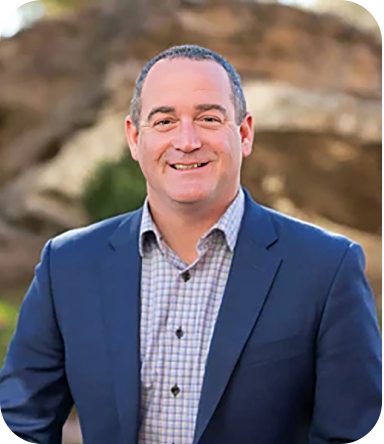
Evan Slater, PharmD
Director, Pharmacy and Admixture Services
Rocky Mountain Cancer Centers – Central Business Office
Dr Slater provides his perspective as Director of Pharmacy and Admixture Services at an organization that participated in the Oncology Care Model (OCM) and transitioned to the EOM.

Can you describe your organization’s transition from OCM to EOM? “It was relatively seamless for us. We didn’t make any changes at the end of OCM that would have put us in a position for failure for EOM. In the OCM, we performed pretty well against our peers and in the model for the indications that are the key focus for EOM. A lot of the drug initiatives and operational initiatives that we developed for OCM transitioned smoothly into the EOM, which laid the groundwork for us to perform well in the EOM.”
How has your organization’s experience been with EOM so far? “From our projections prior to enrollment that helped us drive our decision, I feel like we pretty much performed as expected and saw very similar savings to what we projected based on pre-EOM data that we received. We did earn a shared savings.”
What aspects of patient care have you seen impacted by EOM? “Patients feel quality, patients experience quality. Even though the “dollars and cents” aren’t there in quality, it certainly is there as a multiplier or potentially punitively. You can be doing wonderfully in your drug initiatives and your drug spend, but if you’re not hitting quality measures, you’re not going to see a benefit out of the EOM. A major focus on quality is really the best thing we see from the EOM.”
What benefits has your organization realized due to EOM? “Engagement of physicians to truly support pharmacy initiatives and to show trust in pharmacists to make clinical decisions and recommendations brings more of a multidisciplinary approach to community oncology, giving pharmacy a seat at the table.”
What challenges has your organization experienced due to EOM? “The biggest challenge is the data lag and the fear of the unknown. Oftentimes we’re alerted to make a change when it’s too late. We can’t really impact the last two performance periods because we don’t have the data to know how we performed. That’s the biggest challenge with these programs is a lack of timely data and timely resulting.”

Victoria Nachar, PharmD, BCOP
Former Hematology Clinical Pharmacist Specialist University of Michigan Rogel Cancer Center
Dr Nachar provides her perspective as a former Hematology Clinical Pharmacist Specialist at an organization that participated in the OCM but did not choose to transition to the EOM.
What impacted your organization’s decision not to transition from OCM to EOM? “Once it became the 2-way risk model, it wasn’t financially incentivizing for us because we would probably not reach some of those benchmarks of the OCM. We spend a lot of money on monthly care management versus excess drug costs or treatment costs, we have a lot of stewardship when it comes to medications, but we probably wouldn’t reach the benchmarks for overall monthly cost of patient care.”
Have the EOM updates to benchmark threshold had any impact on your organization’s decision not to enroll? “I think some of the same barriers and challenges still apply. They upped some of the reimbursement payments, which kind of leveled the playing field, but it is still below where it was with OCM. For centers that participated in OCM and were in the initial phase of EOM, the changes probably were helpful from a financial perspective, but for new institutions that enrolled when they had the re-enrollment period, I think the same challenges and barriers are there.”
“We’re such a large institution and a lot of it is care coordination. For example, for the social determinants of health screening we rely on social workers. If they’re doing that screening for all the patients, then they can’t respond to other social work requests they’re getting. Just having them screen for social determinants of health outside of EOM has put them at like an 8- to 10-week turnaround for other requests. It would be risky. And there’s not good modeling or financial risk calculators to review an organization’s patients or cases and see on average if you would hit it.”
Potential Ways to Incentivize EOM
Our panelists agree, the updates may make a positive impact to those participating; however, they shared additional ways the program could be made more attractive for practices.

Predictive Modeling

Minimization of Two-Way Risk

Introductory Period of Optional Risk

Real-Time Tracking of Performance

Additional Incentive for High-Risk Patients

Leveraging Artificial Intelligence to Expedite Data Feeds
Impact of Pharmacist-Driven Interventions on Costs in the EOM
A recent US Oncology Network study evaluating the impact of pharmacists in reducing total cost of care (TCOC) in the EOM model from July 1, 2023 to December 31, 2024, has found that pharmacist medication initiatives within The Network’s EOM participation resulted in a $9 million reduction in TCOC across 5 practices.2
Medication Initiative and Average TCOC Reduction per Intervention2
